

Education has undergone a seismic shift in recent years, and at the heart of this transformation is the integration of technology. Today, technology not only supports but actively reshapes the way educators teach and students learn. With digital tools, platforms, and resources becoming accessible globally, education is evolving to meet the needs of a rapidly changing world. In this article, we’ll explore how technology is revolutionizing education and examine its impact on teaching methods, accessibility, and future career readiness.
Enhancing Traditional Teaching with Digital Tools
The advent of digital tools has augmented traditional teaching methods, creating more engaging and interactive learning experiences. Tools like interactive whiteboards, video lessons, and virtual classrooms allow educators to reach students in ways that a chalkboard or textbook never could. For instance, rather than relying solely on lectures, teachers can now use multimedia presentations, online simulations, and digital storytelling to present concepts more dynamically.
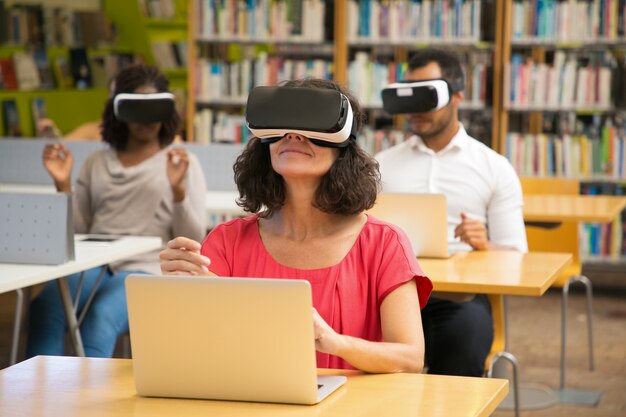
Further, technologies like augmented reality (AR) and virtual reality (VR) bring lessons to life. Imagine studying ancient history by virtually touring the ruins of a Greek amphitheater, or learning about the solar system through a VR journey across planets and stars. These immersive experiences make learning more memorable and can cater to different learning styles, especially for visual and kinesthetic learners.
Expanding Access to Education
One of the most significant benefits of technology in education is its role in broadening access to learning opportunities. With the internet, students in remote areas or under-resourced communities can access the same quality of education as those in urban, affluent schools. Platforms like Khan Academy, Coursera, and edX provide free or affordable courses in subjects ranging from elementary science to advanced computer programming, available to anyone with internet access.
Online learning has also made education more flexible. Students who may have other commitments—such as jobs, family obligations, or health issues—can pursue courses on their own schedule, thanks to self-paced programs and virtual classes. Moreover, distance learning programs have expanded higher education options for students around the world, enabling them to attend prestigious universities without relocating.
Personalized Learning with AI and Data Analytics
Artificial intelligence (AI) and data analytics are driving forces behind personalized learning, where content is tailored to the individual needs of each student. By analyzing data on student performance, AI-powered platforms can adjust lesson difficulty, recommend additional resources, or identify areas where a student might be struggling. This customization is invaluable, as it ensures students receive support that targets their specific needs rather than a one-size-fits-all approach.
For teachers, data analytics offers insights into student progress and engagement, helping them identify patterns and adjust their instruction accordingly. If a particular concept is challenging for the majority of the class, the teacher can address it more thoroughly or use different methods to improve comprehension.
Preparing Students for the Future Workforce
In today’s world, technological skills are essential. Integrating technology into education prepares students for a workforce where digital proficiency is increasingly valued. Through coding classes, digital media projects, and hands-on experience with software, students gain familiarity with the tools they’ll likely use in their careers. Technology also encourages the development of crucial soft skills such as problem-solving, collaboration, and adaptability—skills that will serve students well in any profession.
Conclusion
Technology has become an indispensable element of modern education, creating opportunities that were once unimaginable. By enhancing teaching methods, improving accessibility, personalizing learning experiences, and preparing students for the future, technology is truly transforming education. As we look forward, it’s clear that the integration of technology in the classroom is not just beneficial but essential for equipping students with the knowledge and skills they need to succeed in the 21st century.